Summarize this article with:

Every February 11th, the world celebrates the International Day of Women and Girls in Science, a reminder that despite progress, the gender gap in STEM, especially in IT roles, remains a pressing issue. So, while women now make up 28% of the STEM workforce, IT professions continue to see some of the lowest representation, hovering around 19% for IT professionals and 23% for IT technicians.
This is not just a diversity issue, it’s a business challenge. With over 1 million STEM jobs added in the last seven years, companies struggling to find talent must rethink how they attract, recruit, and retain women in IT roles.
Also read our article about 20 Amazing Women Leading Europe’s Tech Revolution
? Revamp Job Descriptions and Hiring Criteria
Studies show that women tend to apply for jobs only when they meet 100% of the listed requirements, while men apply when they meet around 60%.
Thus, avoid overloaded job descriptions that list excessive “nice-to-have” skills and focus on the core competencies required for success.
Also, use gender-neutral language and highlight a company’s commitment to diversity.
♀️ Promote Female Role Models and Mentorship
Representation matters. Women are more likely to pursue IT careers when they see successful female leaders in the field.
So, establish mentorship programs where women in junior roles can connect with senior female IT professionals.
Also, encourage internal and external thought leadership opportunities for women (e.g., conference speaking engagements, LinkedIn articles, webinars).
⚖️ Offer More Inclusive Workplace Policies
Firstly, flexible work arrangements (hybrid/remote work, flexible hours) help accommodate work-life balance, which can be a deciding factor for many women in IT.
Parental leave policies should also be inclusive and well-communicated.
Lastly, ensure a safe and supportive work culture, including clear policies against gender bias and harassment.
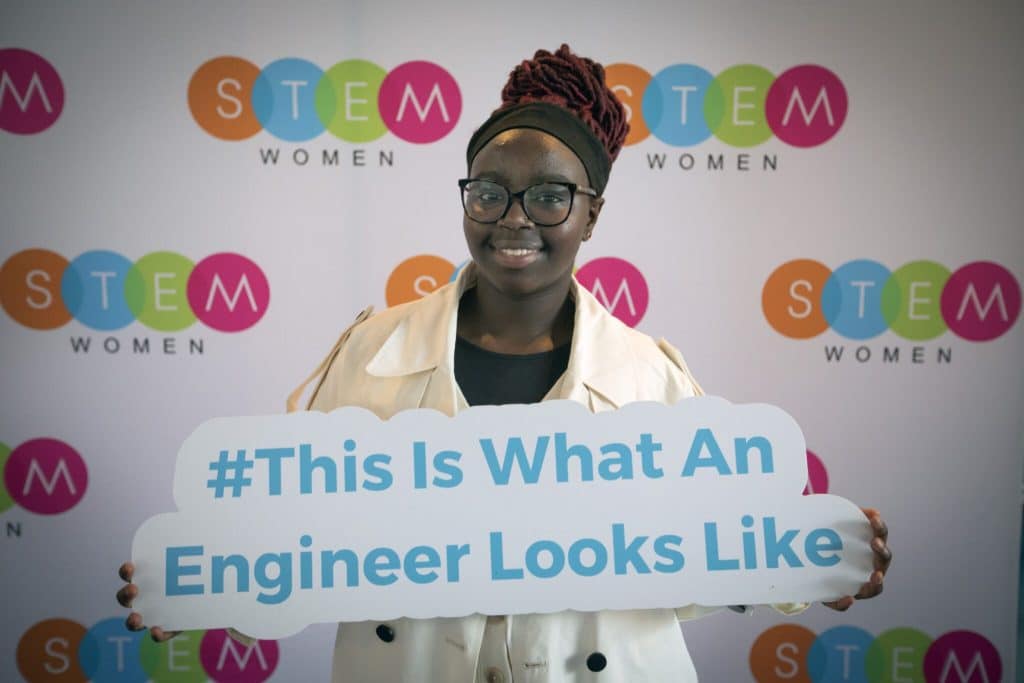
Photo source: www.stemwomen.com
Even well-intentioned hiring practices can unintentionally discourage female candidates. So here’s how companies can fix that:
?Rethink Technical Assessments: Traditional whiteboard coding tests or high-pressure exams can be intimidating and don’t always measure real-world problem-solving skills. Consider project-based assessments instead.
? Bias in Resume Screening: AI-driven recruitment tools can also reinforce existing biases. Thus, ensure hiring algorithms are regularly audited for fairness.
???Interview Panels: Last, if all interviewers are male, it might send the wrong message. So include diverse interview panels to make candidates feel represented and valued.
Here are some real-world initiatives by companies that have successfully worked to increase the representation of women in IT roles:
A company demonstrating a strong commitment to promoting women in technology through several initiatives:
Photo source: https://registration.socio.events/e/2024woicarolinas
Microsoft engages in various programs aimed at attracting, recruiting, retaining, and developing women globally in the technology field:

Photo source: microsoft
IBM has implemented strategies to provide women and underrepresented groups with opportunities to reach their potential:

Photo source: IBM Blogs
Under the leadership of Roshni Nadar Malhotra, HCL Technologies has set ambitious goals for gender diversity:
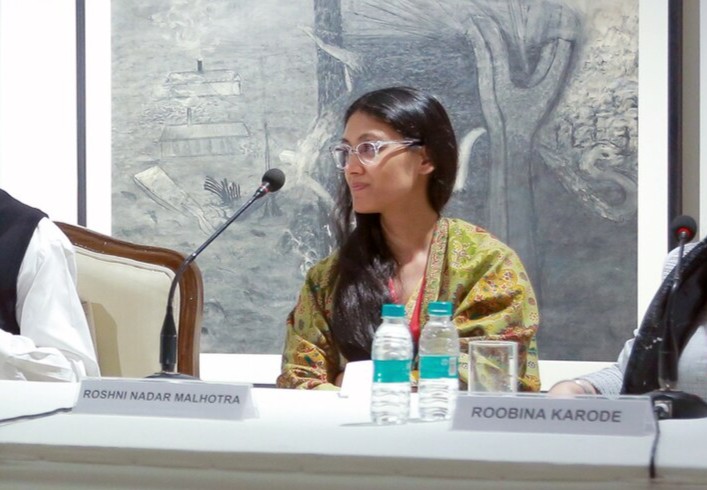
The Vice President, Shri M. Venkaiah Naidu addressing the gathering during his visit to the Kiran Nadar Museum of Art, in New Delhi on February 14, 2018.
Delphine Donné, VP/General Manager for Logitech Personal Workspace Solutions, has fostered an inclusive environment:

Photo source: Delphine Donné | LinkedIn
Finally, these initiatives demonstrate that with deliberate action and commitment, companies can make significant strides in closing the gender gap in IT.
As IT recruitment companies, there are various initiatives to promote women’s participation in STEM fields you can partner with. So here are some notable examples:
RTC is a nonprofit organization that collaborates with over 25 tech leaders to enhance diversity in hiring. They provide IT recruitment firms with access to a global network of more than 31,000 women in technology, ranging from undergraduates to early-career professionals.
Thus by partnering with RTC, recruitment companies can:
For instance, companies like Duolingo and Palantir have partnered with RTC to increase the diversity of their hiring pipelines, resulting in significant improvements in the representation of women in their tech roles.

While not an IT recruitment company per se, Girls Who Code is a notable organization that aims to close the gender gap in technology by equipping young women with computing skills. They run programs during the academic year, teaching high school girls programming, robotics, and web design.
IT recruitment firms can collaborate with such organizations to:
Thus, these initiatives illustrate how IT recruitment companies can actively promote women’s participation in STEM fields, leading to a more diverse and innovative workforce.
The International Day of Women and Girls in Science is a powerful reminder that it is time to action. Companies can’t afford to wait until 2070 for gender parity in STEM.
Thus, by taking deliberate actions, businesses can create an IT workforce that is both diverse and future-ready.
? Rethink Job Descriptions
Firstly, avoid unnecessary barriers that might discourage female applicants.
? Support Female Role Models
Then, promote mentorship and leadership opportunities for women in tech.
? Improve Workplace Policies
Also, implement flexible work options and inclusive parental leave.
? Ensure Bias-Free Hiring
Finally, audit recruitment processes to remove unconscious bias.
Looking to build a more inclusive IT team? Our recruitment experts can help you find and retain top female tech talent.

Free download
Connect with the latest news in the IT and Tech sector


